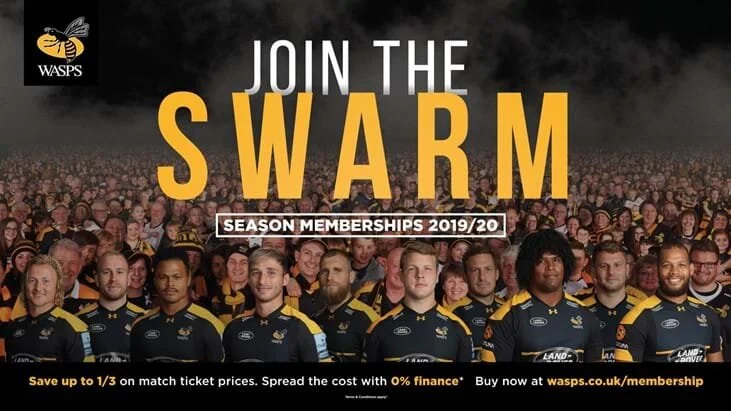
Wasps Rugby Campaign

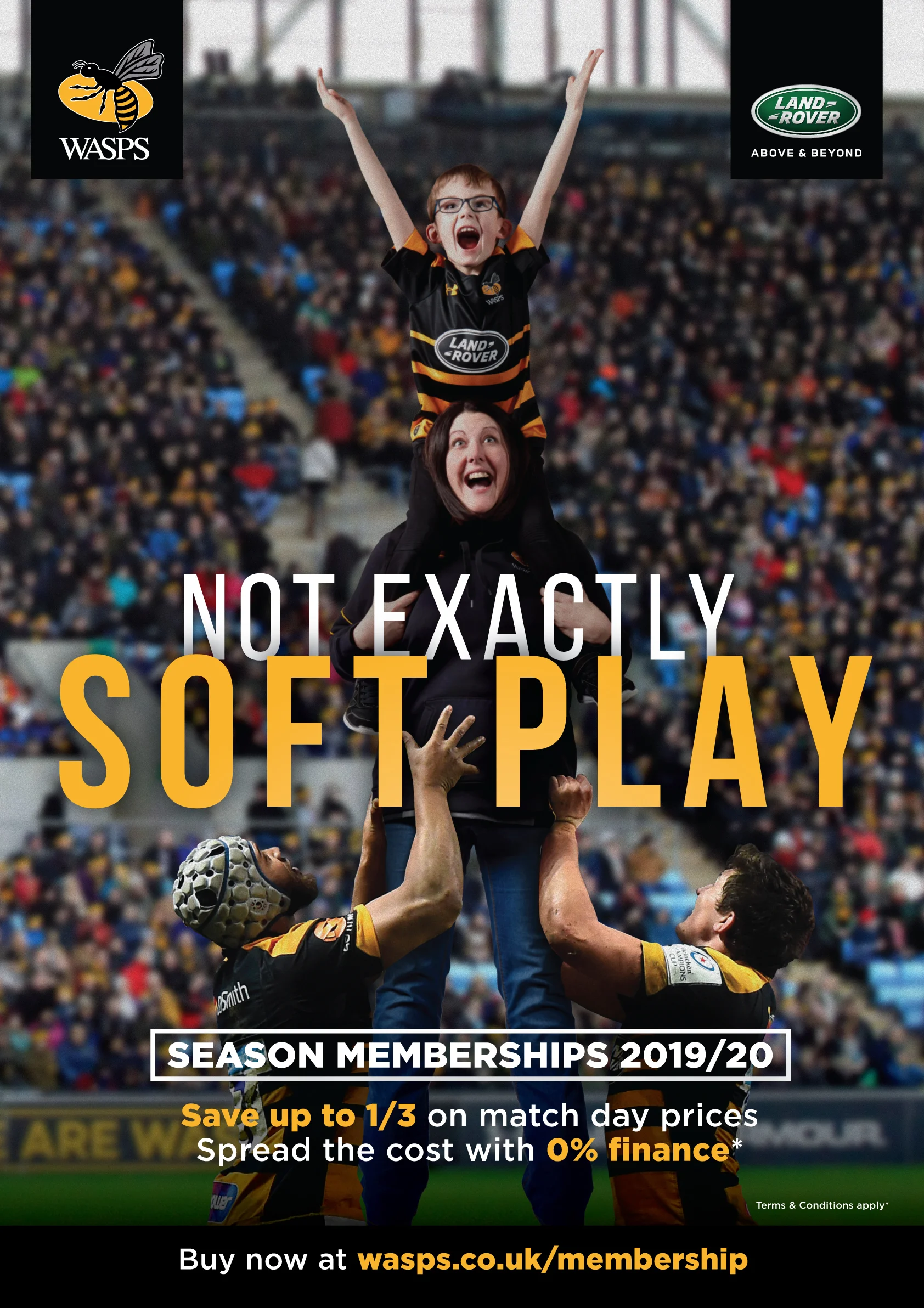
“Here’s the brief.”
“For the 2019/20 season campaign, we’re going to take two “in-match” action shots, cut out some of the players and replace them with Wasps fans mimicking what happened on the pitch.”
“And we want a huge crowd shot of fans, but we can’t use the stadium and we’ll only have about 60 people for you to work with…”
“Are you up for it?”
As a keen rugby fan who grew up in Coventry, the short answer was… “Yes!”
So where to start with this brief?
As with any project, there were a number of challenges we needed to figure out before the day of the shoot:
Where were we going to shoot this, bearing in mind we need to fit in more than 60 people and keep them happy and entertained while being photographed multiple times?
How do we make the lighting in these new shots match the lighting in the original pictures so that the composite image used in the final advertisement looks completely authentic?
How do we get real fans of the club - people who are not models or actors - to look like they’re really there on the pitch, playing alongside their heroes?
A simple solution that works for everyone
The first thing we decided on was the shoot location at the Ricoh Stadium. Although we didn’t have access to the stands, Wasps had a room that was big enough and being there also kept things interesting for the fans. We agreed they’d be treated like VIPs when they arrived, they’d get to see behind the scenes, and also get some freebies and food and drink thrown in too.
This was all carefully planned to thank people for their time and to keep them happy and excited to be there, helping out their club. After years of experience I’ve learnt that just because people have volunteered for a shoot, it doesn’t mean they’ll automatically be enthusiastic once you point a camera at them. So we didn’t leave anything to chance!
Studio lighting that looks like you’re on a rugby pitch
Knowing that someone was ultimately going to have to stitch the original and new images together (not me, on this occasion) I wanted to make that job as easy as possible and ensure that the new composite images looked spot on.
There were three technical elements to take into account:
The lighting had to be exactly the same as the original match shot
The shot needed to be in sharp focus, even though we’d be in a studio environment, where freezing fast-moving subjects can be a challenge
The background needed to be exactly right so that editing the pictures would be straightforward.
Test shots or just larking about??!!
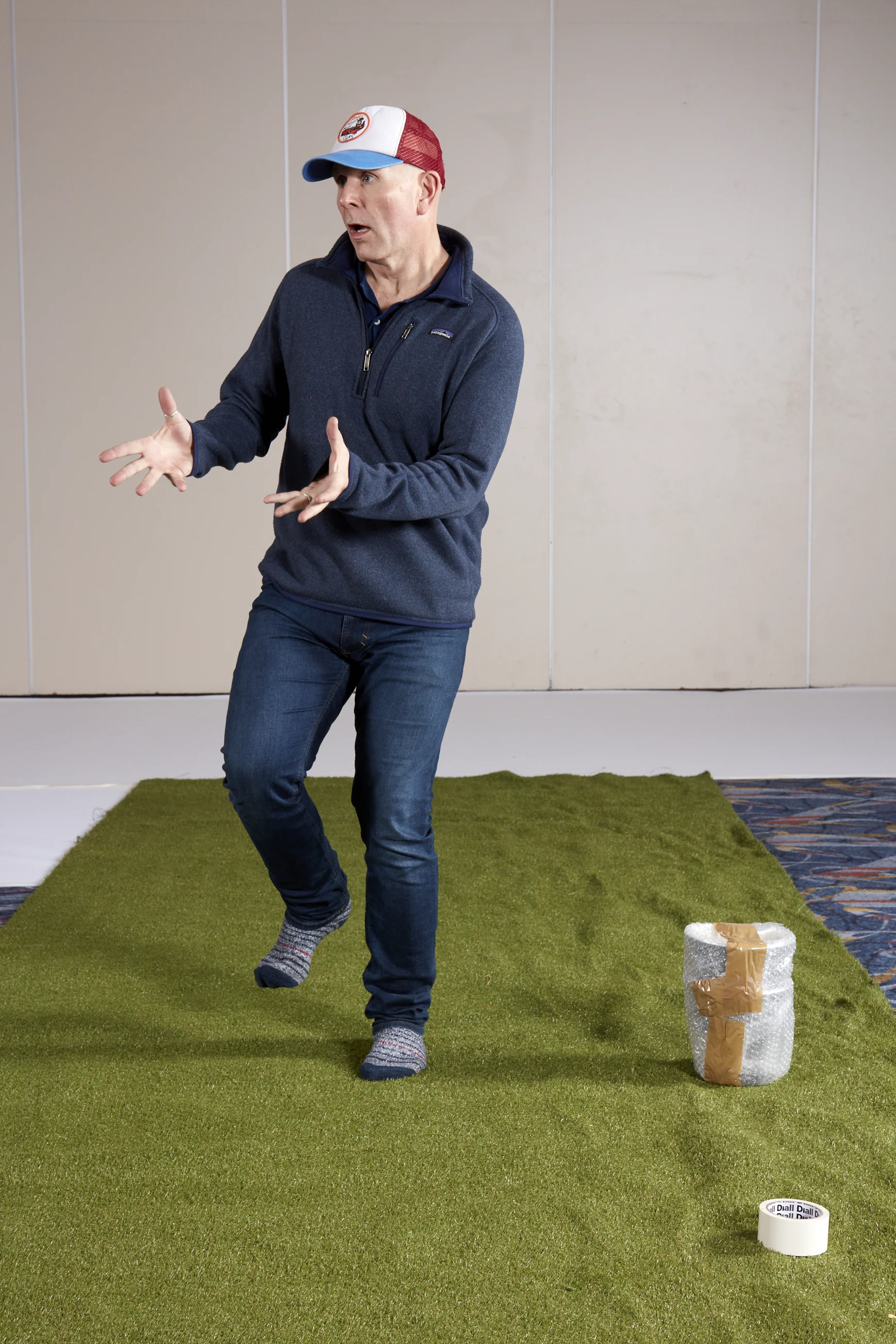
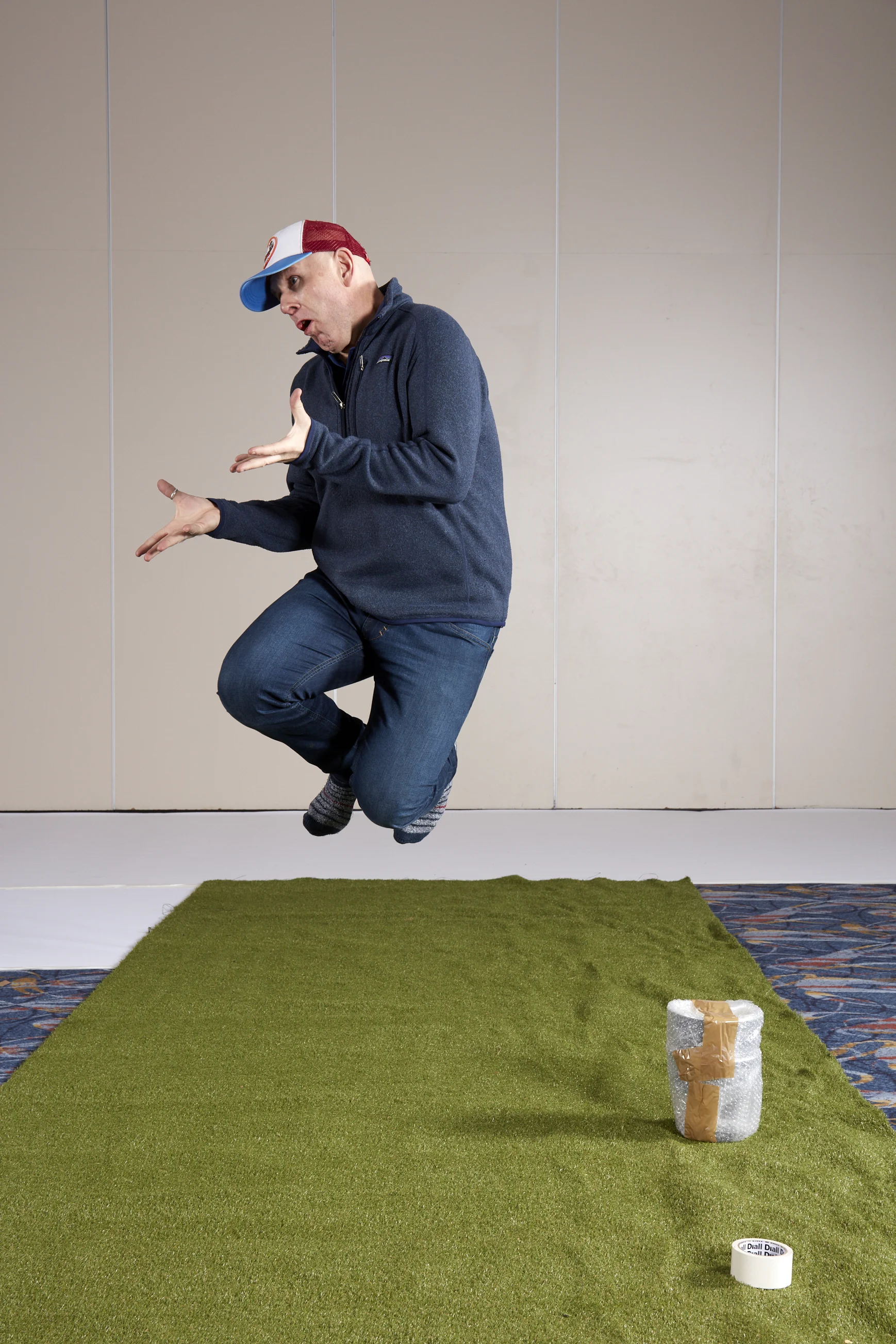
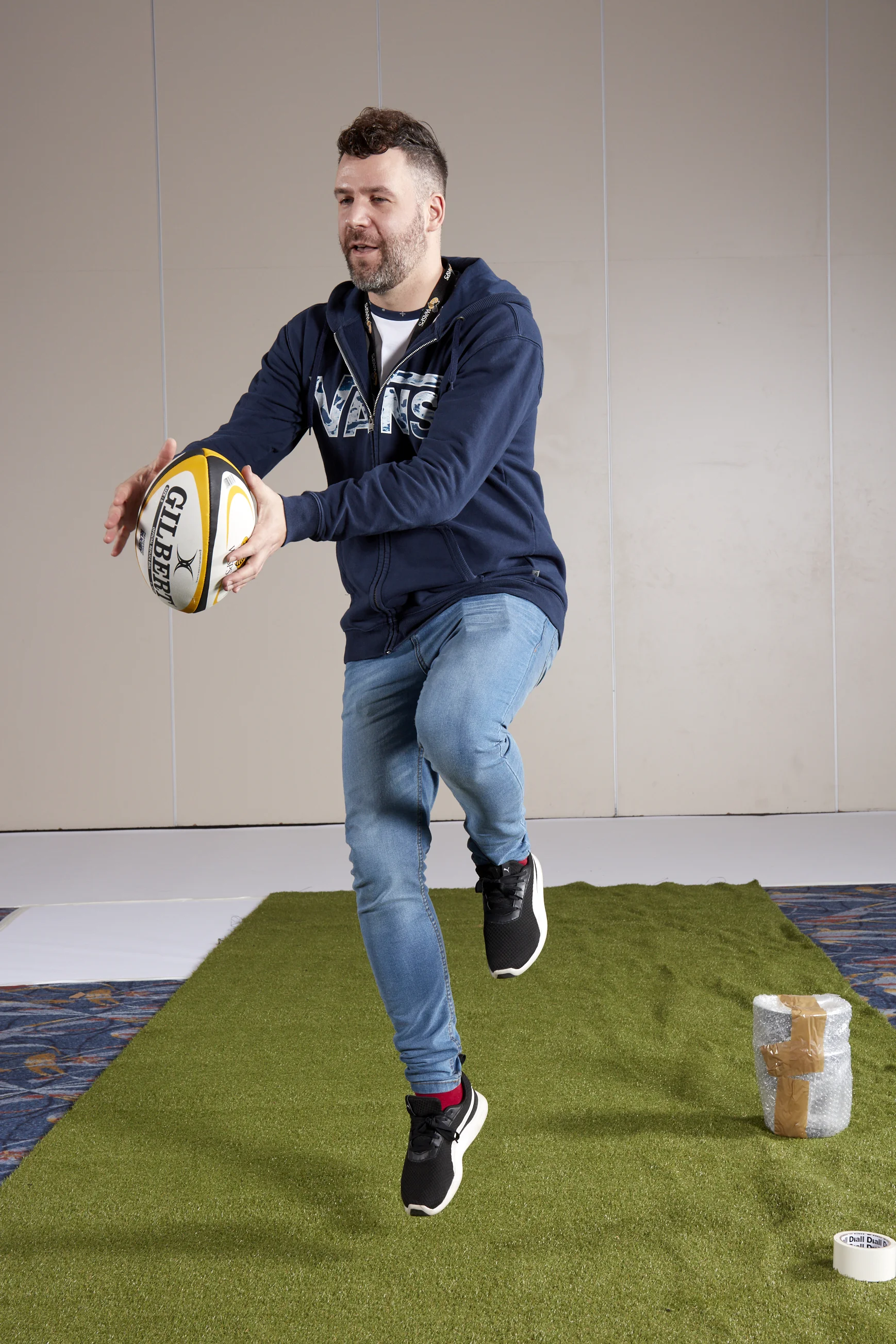
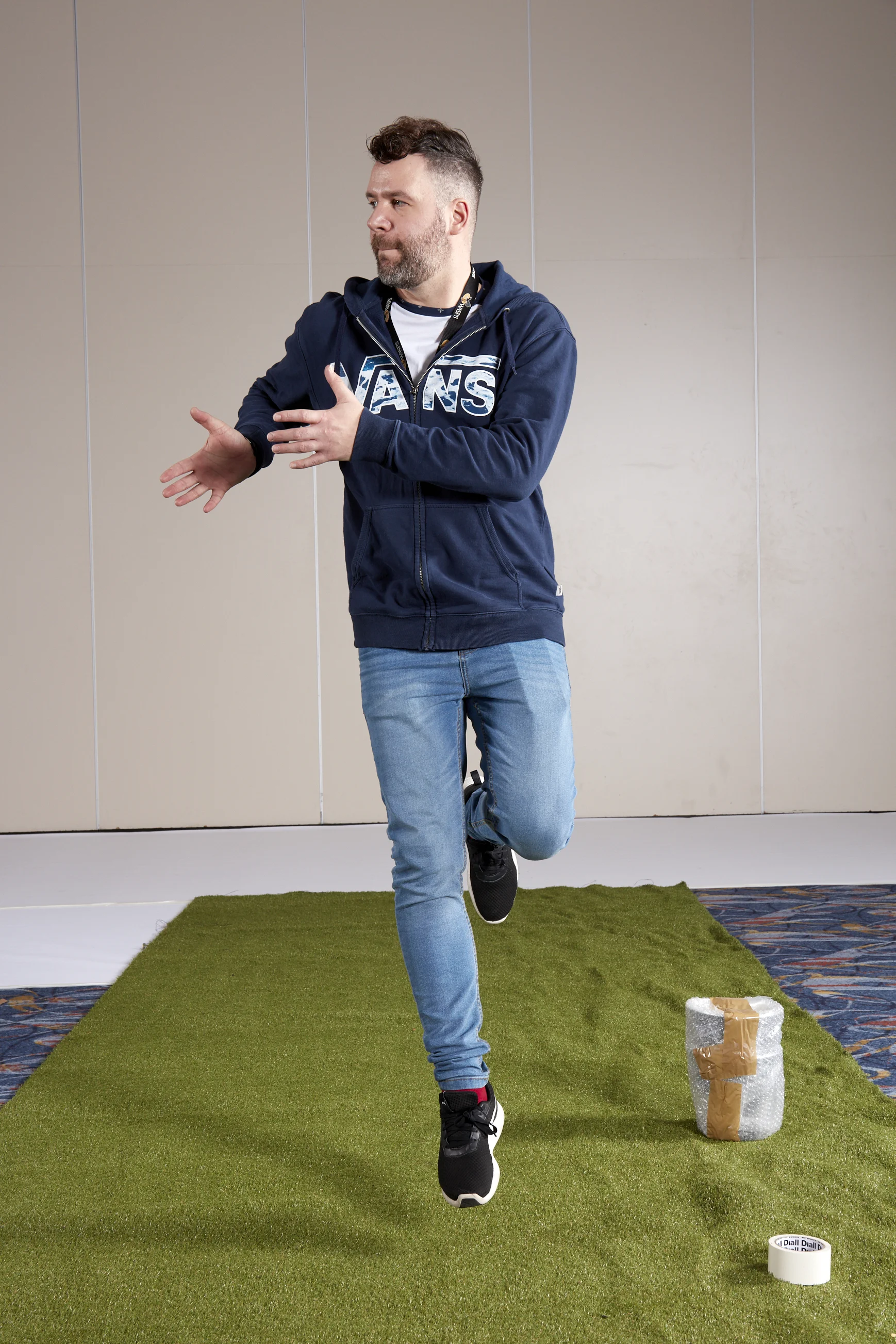
Lights, lights, lights… and eventually lights, camera, action!
Steve Price (the Art Director) and I spent some time studying the base image to make sure we were mimicking the lighting exactly. Getting this right makes the compositing element so much easier in making it look like the fans are really there on the pitch. For example, if you have shadows going in the opposite direction to the original image, it’s going to look weird.
Getting everything in focus…
The next issue was the speed of my subjects. For two of the shots the models would be moving at fairly high-speed. This can lead to motion blur, even when using studio flashes.
I have a number of lighting sets, but none of them were quite right for this, so I hired a set of studio lights with a very short flash duration. In simple terms, the shorter the amount of time the flash lasts, the better its ability to freeze the action absolutely dead.
The perfect background for easy editing
The final technical problem was to make the final images easy to cut out and blend with the new background. A busy background makes an editor’s life harder, so we created a big white studio on set by using several rolls of background paper and carefully taping it all together to make it completely seamless, and big enough to accommodate up to 60 people.
Getting the best performance out of the fans
Getting professional models to look like they’re really there on the pitch, playing rugby - when they’re actually in a studio set-up - would have been challenging. But we didn’t have professional models. We had rugby fans - people who weren’t used to posing and performing for endless clicks of the shutter.
So how did we get the best out of non-models?
It all started at the planning stage.
Calls went out via the club’s database for fans fitting certain physical attributes. We asked for photographs, but there was no time to do a casting, so we invited several people along for each role. This meant that if someone couldn’t move in the right way for the shot, we’d have alternatives.
Ahead of the shoot, we explained to each person what was involved so we could manage their expectations. We warned them they’d probably be repeating the same movements over and over again until we got the right shot.
Then on the day, we spent time coaching our rugby fans in exactly how we wanted them to move and react, having practised this first ourselves so we knew what did and didn’t work.
Lastly we deliberately created a light, fun atmosphere on the shoot. Laughing at ourselves and the whole situation kept the spark of excitement going and stopped people getting bored.
We were lucky to have some great Wasps fans to work with, but planning ahead was a big part of getting the results we wanted. It paid off on the day, and in the images we were able to create. It was a fun challenge, and everyone left the shoot happy to have helped out their club.